
Why Best Practices Make Your Content Sound Like Everyone Else's
Oct 22, 2026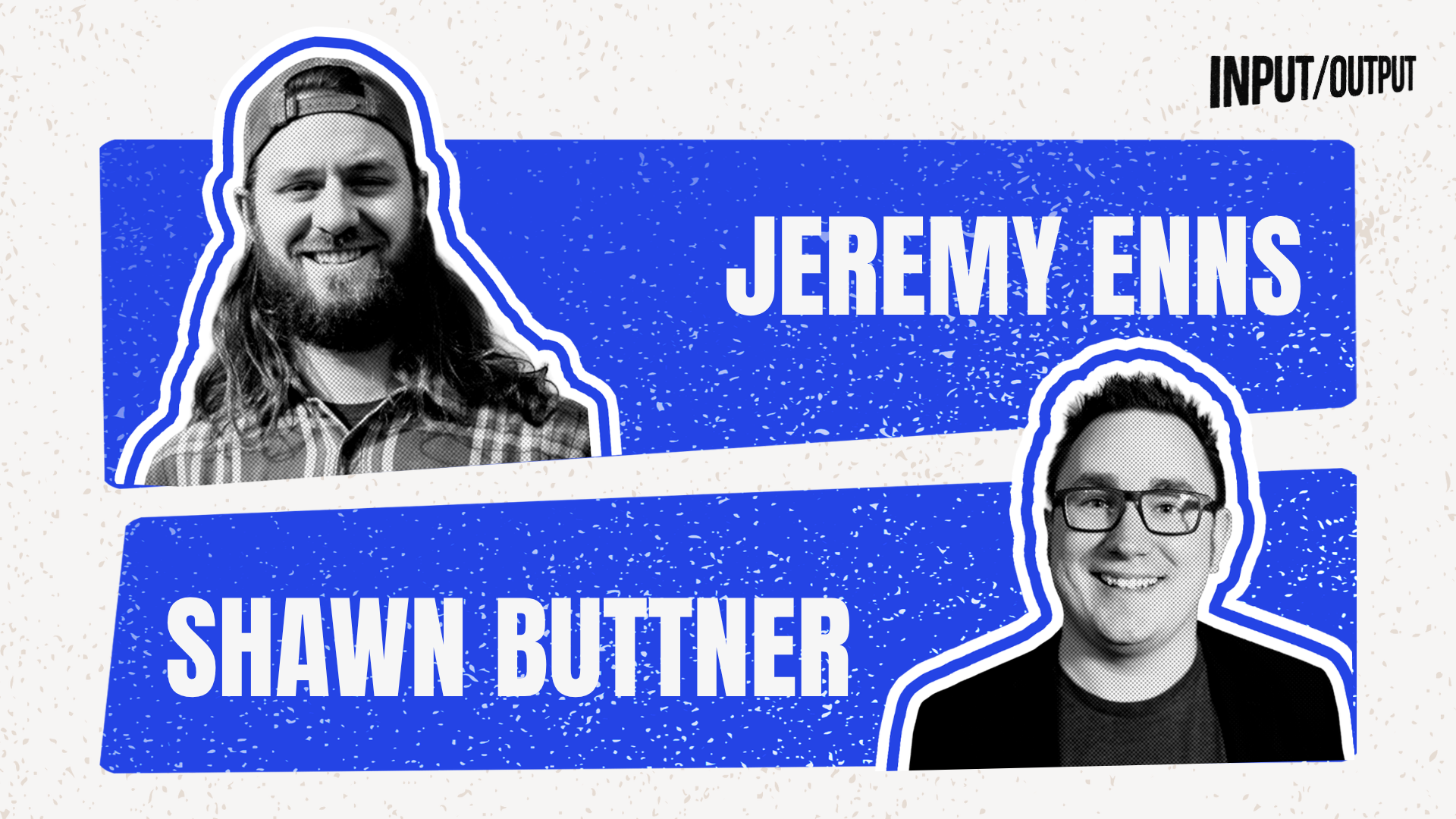
I spent hours on the couch trying to get motivated enough to walk to my desk and hit record.
It was the third night in a row I hadn't slept. I still had sales calls on the calendar, where I'd be asking people to trust me as their coach. I still had the week's writing to finish. And the YouTube video I was supposed to record was about managing your energy.
I recorded it. I didn't say a word about the insomnia.
That's what my content looked like back then. I'm an introvert. Getting on camera was not my favorite thing, and being out on the internet at all was less so. Sharing something personal felt like handing the internet a target. So I played it safe. I took what I'd learned as a high-performance coach and passed it along, clean and correct. I'd even modeled the whole operation on Brendon Burchard's high-performance business: post weekly, show up consistently.
It all followed the best practices. And it sounded like everybody else.
Best practices lead everyone to the same place
When I sat down with my friend and mentor Jeremy Enns, founder of Podcast Marketing Academy, he put words to what I'd been feeling for years:
"Best practices lead everybody to the same end result, which is inherently generic and cliche and undistinctive."
That's the trap. Best practices are a stepping stone. They get you to competent. But everyone else is reading the same playbook, so everyone ends up in the same spot, saying the same things in the same tone.
If your creative DNA isn't in your voice, what you make is generic. It doesn't matter how well it follows the rules.
Why this costs more now
Jeremy described what happens to coaches and service providers who do every best practice: their landing page language sounds the same, their company names sound the same, their services look the same. There's no reason for someone to pay double to work with you, and no waitlist, because you're one of many.
Now add AI. In our conversation I said it felt like AI and best practices were converging on the same point: common knowledge. That was early in the year. It's truer now. Anyone can generate a clean, correct explanation of almost anything in seconds. The generic version of your expertise is free.
What isn't free is you. Your experiences, your opinions, the weird connections only you would make.
Jeremy said it plainly: there are "very well trod paths to average," and almost none to exceptional.
A note on this episode
Jeremy and I recorded this conversation in early 2026, on Creators That Crush. It turned out to be part of the shift to Input/Output. The question we were chasing, what makes a creator's work theirs, became the Voice part of the framework I use now: Voice, Workflow, Confidence. This was the first time I tried to put a structure around it out loud. I called it creative DNA, and I'm still building it out.
The three parts of creative DNA
Here's how I see it. Three things make a creator's work unmistakably theirs.
1. Your self
Your experiences, your beliefs, your goals, what you're running toward and what you're running away from.
Jeremy grew up on Lego, video games, and bike rides. For years he thought none of it was useful. "What's the business there?" Then he realized the Lego habit was how his brain worked: take a thing apart, look at the exploded diagram, see how the pieces fit. That's exactly how he approaches podcasting now. The video games turned into a lens on show design. A good game repeats the same loop over and over and it still feels new, because enough changes each time.
I recognized that immediately. As a recovering software engineer, the best thing you can do with something broken is decompose it down to its base parts. It's the same instinct. It just took me a long time to let it show up in my content.
2. How you relate to others
Who influences you, and how you let them in without letting them write over you.
Jeremy's biggest influence is Seth Godin. He's read the books and listened to Seth's podcast front to back, twice by his count. And he still goes looking for where Seth is wrong. Nobody's thinking is a hundred percent right, so you go find the flaws in your heroes on purpose.
He also told a story that changed how he thought about imposter syndrome. A listener asked Seth how he knew his ideas were right, where was the research? Seth's answer, as Jeremy remembers it: research isn't his job. His job is to describe how things look from where he's living, and make the case. That gave Jeremy permission to write about how he sees things, be wrong sometimes, and keep going.
3. What you add beyond best practices
Learn the best practices. Then leave them.
Jeremy describes hitting "the bottom of the barrel," the feeling that there's nothing left to say because you've covered everything other people write about. The barrel is just the known universe of topics. The move is to step out of it and write about what you see.
His practical version is my favorite tool from the whole episode. Look at your market and list the clichés: what everybody says, how everybody promises it, how every show is structured. That's your list of things not to do. As he put it, "you can not know exactly where you're heading, but you can know I'm heading away from that."
Opinions are where your DNA shows up
Near the end I asked Jeremy what the most successful creators he knows have in common. His answer had nothing to do with consistency, niche, or a posting schedule:
"They have strong opinions on their space and their work and the way to do things that are not necessarily universal."
That's the part best practices can't give you. A best practice is, by definition, the opinion everyone already agrees with. Your opinions, the ones you'll defend even when they're not universal, are where your creative DNA becomes visible. Your voice is your point of view, expressed.
Release the handbrake
Jeremy closed with a line he got from David Hieatt, co-founder of Hiut Denim and the Do Lectures. When we talk about "finding our voice," Hieatt's reframe is that we already have one. We just need to release the handbrake.
That one stuck with me, because it's my story. After ten years of doing this, I finally don't feel like a different person when I turn on the camera or hit record. I didn't find a new voice. I stopped holding the old one back.
The version of that energy video I'd make today would start on the couch. Three nights without sleep, a sales call in an hour, and a coach who teaches energy management struggling to get to his own desk. That's the version only I could make. It's also the one somebody needed to hear.
Your turn
Pull up the last thing you published. Read it like a stranger would.
- Could anyone in your field have written it? If you swapped in their name, would anyone notice?
- What did you leave out because it felt too personal, too weird, or "not relevant"?
- What's one opinion in it you'd actually defend, even if others in your space would disagree?
If those answers are uncomfortable, good. That's where your creative DNA is hiding. You already have a voice. Let it into the work.
About Jeremy Enns. Jeremy is the founder of Podcast Marketing Academy, which helps expert-based businesses grow through stronger positioning, audience development, and creative voice. If you have a show, take his free strategy assessment (the EARS framework) at podcastmarketingacademy.com.
Listen or watch the full conversation: Listen · Apple Podcasts · Spotify · YouTube
More on Jeremy: his Input/Output guest page